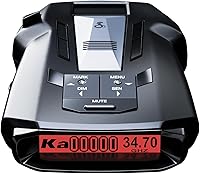
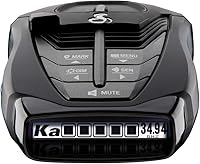
Cobra RAD 350 Laser Radar Detector Review: Worth It? (November 2026)
The Cobra RAD 350 is a basic buy only if you want simple front and rear alerts at a low price. Its IVT filter and color display keep everyday driving calm, but its X, K and Ka coverage and short feature list trail the longer-range detectors here.
On this page (8 sections)
The Cobra RAD 350 is a basic, affordable detector that covers the main radar bands and watches for laser in front and behind. It suits drivers who want plain alerts and a clear display without GPS or app features.
The trade-off is range and filtering depth against the longer-range detectors below.
This Cobra RAD 350 laser radar detector review checks the specs that matter on a daily drive, then explains when spending more makes sense. The short answer: buy it for simple coverage, skip it if you want the earliest possible warning.
The Cobra RAD 350 at a glance
The RAD 350 is a straightforward windshield detector with a color display and a corded 12-volt power source. Cobra builds it around the basics: band detection, a front and rear laser sensor, and a filter that quiets false alerts from modern cars.
Cobra RAD 350: Best for simple front and rear alerts
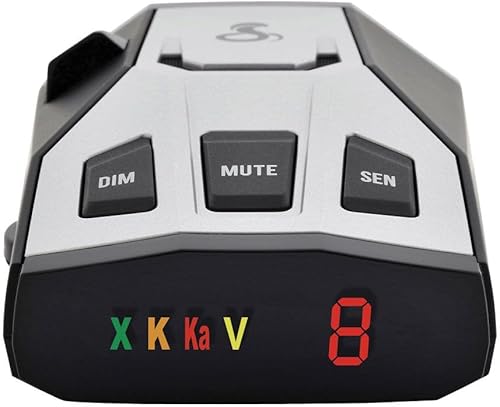
- X, K and Ka band detection
- Laser eye sensor for front and rear
- IVT filter for fewer false alerts
- 7-segment color display
- 12-volt corded power
A plain, affordable detector that covers the main radar bands and watches for laser in front and behind. The trade-off is range and filtering depth compared with the Uniden models.
Pros
- Detects X, K and Ka bands plus laser and VG-2
- IVT filter cuts alerts from collision avoidance systems
- Audible tones identify band and signal strength
- Color display shows band icons and a numeric meter
Cons
- No GPS for lockouts or camera alerts
- Less sensitive than the Uniden detectors here
- No Bluetooth or app support
It measures 4.12 x 2.64 x 1.35 in and weighs 10.08 ounces. The display shows band identification icons and a numeric signal strength meter, which helps you judge an alert at a glance.
The band icons tell you which type of signal you are hearing, and the numeric meter gives you a rough read on how strong it is.
The frequency bands supported are 10.525 GHz, 24.125 GHz and 34.7 GHz, which line up with the X, K and Ka bands it is built to detect. Cobra rates it for VG-2 signals as well, so it watches for older radar-detector sensors alongside the usual bands.
The box carries the detector, a manual and a power cord. Power comes from your car's 12-volt outlet rather than a battery, so there is nothing to charge between drives.
Cobra backs it with a 12-month warranty. Our score weighs specs, features and buyer feedback against what you're shopping for, and 6.9 reflects a detector that does the basics well without the range or extras of the top picks here.
Who the RAD 350 suits
The RAD 350 fits drivers who want simple radar and laser alerts without paying for GPS, Bluetooth or app support. If your main concern is knowing when a signal is nearby and you keep your setup basic, it covers the core job.
You mount it, plug it in, and listen for the tones.
It also suits a second car or a weekend vehicle where a low-cost detector makes more sense than a premium model. The front and rear laser sensor and the audible band tones are useful in everyday traffic.
A driver who mostly stays in town and wants a plain heads-up fits it well.
Skip it if you drive long highway stretches where early warning matters most. Sensitivity is the weak point against the Uniden models, so a driver who wants the longest possible lead should look elsewhere.
Our guide to what a radar detector does explains how band coverage and range affect real alerts. A buyer who mostly wants to know which band is active, not the maximum possible reach, will find the RAD 350 lines up with that goal.
Bands, laser coverage and filtering in daily use
The RAD 350 detects X, K and Ka radar bands, laser signals and VG-2, which covers the radar guns and laser tools used on most roads today. Signal strength indication appears on the display and in the tones.
The three supported frequencies match the three bands, so the display can tell you what kind of alert you are hearing.
The laser eye sensor watches both ahead and behind you. Laser is harder to pick up at distance, so a detector like this works best when traffic ahead gives you an early hint.
A laser hit aimed at a car in front can give you a moment to react before the beam reaches you.
Cobra's IVT filter is the headline feature for daily calm. It reduces false alerts from collision avoidance systems and traffic flow monitoring devices, so you hear less chirping from the safety tech in nearby cars.
Blind-spot monitors and adaptive cruise systems are the usual culprits, and the filter is meant to keep them from drowning out real signals.
The audible tones identify both the band and the signal strength. That means you can keep your eyes on the road and still tell whether an alert is weak and distant or strong and close.
The 7-segment color display repeats that information visually when you glance at it. For drivers who would rather hear than look, the tones carry most of the message.
Instant-on readiness is the other spec to know. Cobra says the detector picks up radar guns quickly, which matters because instant-on radar gives less warning than a steady signal.
The filtering and the instant-on readiness pull in opposite directions, so the balance matters: too much filtering and you risk missing a brief hit, too little and the cabin fills with noise. For more on how bands behave, read about radar bands and what they mean.
Setting up the RAD 350 in your car
Mount the RAD 350 level on the windshield, with a clear view both ahead and behind, then plug the power cord into your 12-volt outlet. Cobra includes the power cord and a manual in the box.
There is no app to install and no pairing step, so the first drive is the whole setup.
Keep the detector low enough that the wipers don't block its view but high enough that the front and rear laser sensor sees past headrests and passengers. A clean patch of glass helps, and so does avoiding a spot behind tint strips that could cut signal.
The small 1.35-inch height leaves room under most mirror housings.
Route the cord so it doesn't cross your field of view or tangle with the gear shifter. The 12-volt connection means no battery to charge, but it also means the detector only runs when the outlet has power.
If you move it between cars, keep the cord with it so the swap stays quick.
Turn it on and let it settle before you start driving. Then check that the display is readable in daylight and that the volume is set high enough to hear over road noise.
The color display and the audible tones are the two ways the detector talks to you, so set the volume before you rely on either. Our mounting guide covers placement and cord routing in more detail.
Keeping it working and staying legal
Keep the lens and the top of the detector clean, because dust and fingerprints dull laser pickup. Wipe the glass and the detector's sensor window with a soft cloth now and then, and don't leave it baking in direct sun when parked.
The plastic housing and the display both age faster under constant heat.
Treat it as an aid, not a shield. A detector warns you about signals; it doesn't make speeding safe or legal.
Some states and provinces restrict detector use, so check the rules where you drive before you mount one. Our responsible use guide walks through the legal side.
The front and rear laser sensor is there to inform you, not to give you cover.
Keep the manual and the receipt for the 12-month warranty. If the cord frays or the display dims, contact Cobra rather than opening the case.
The warranty runs 12 months, and the included manual covers the band icons and tones if you forget what a signal means.
The trade-offs to know before you buy
The clear trade-off is range and features. The RAD 350 covers the main bands but is less sensitive than the Uniden detectors below, so its warning comes later on long, open roads.
That gap matters most on the highway, where an early alert gives you time to adjust.
It also lacks GPS. There is no mute memory for repeated false alerts and no preloaded red light or speed camera database.
The IVT filter helps with collision avoidance systems, but it isn't the same as GPS lockouts. A retail door that sets it off will set it off again next time, because it has no way to remember the spot.
There's no Bluetooth or app support either. You won't get Wi-Fi updates or a phone app to change settings.
The 12-volt cord keeps it simple, but you're tied to the outlet. For some drivers that simplicity is the point, since nothing needs pairing or updating.
The display is a 7-segment color unit rather than a full color screen. It shows band icons and a numeric meter well, but it cannot present the richer information a multi-color OLED can.
That is part of why the RAD 350 stays affordable.
For a driver who wants plain alerts and a low-cost entry, these gaps matter less. For a driver chasing the longest lead time, they add up quickly.
The 6.9 score reflects that split.
Alternatives worth a look
Two Uniden detectors are the natural step up from the RAD 350. Both cost more and both deliver longer range and more features.
The right one depends on whether you want GPS lockouts or connected app features. Each one fixes a different gap in the Cobra's package.
Uniden R3: best for long-range protection
The Uniden R3 is the strongest pick here for drivers who want the earliest possible warning. It detects X, K, Ka and laser, and its extreme long-range sensitivity is the main reason it scores 8.8.
The four-band coverage matches the Cobra's plus laser, but the reach is the real step up.
Its GPS technology remembers and mutes common false alerts along routes you drive often, so retail doors and similar sources go quiet. Preloaded red light and speed camera locations, with free database updates, keep the warnings current.
A multi-color OLED display and voice alerts round out the package. The voice alerts are programmable to fit your driving style, and the Ka band voice alert tells you what type of radar is nearby.
If you want the best protection for highway driving, this is the detector to beat.
Uniden R4W: best for app and Wi-Fi features
The Uniden R4W is the connected option, with Wi-Fi, Bluetooth and R/TACH app support. Its advanced K and Ka band filtering and auto mute memory make it the quieter, more modern pick, and it scores 8.7.
It carries a Blackfin digital signal processor and covers Ka, K and X bands.
Auto mute memory learns repeated false alerts on your routes and silences them automatically. The multi-color OLED display and voice alerts keep information clear, and the speed and red-light database is included.
Wi-Fi means updates without a cable, and the app adds phone control. Choose it over the R3 if you want app features and Wi-Fi updates; choose the R3 if raw range matters more than connectivity.
If you're comparing Cobra models specifically, our Cobra RAD 480i review covers the Bluetooth option, and the RAD 480i vs RAD 490i and RAD 480i vs RAD 700i comparisons show where the mid-range Cobras land.
Verdict: buy or skip the Cobra RAD 350?
Buy the Cobra RAD 350 if you want simple front and rear alerts and a clear color display at a low price. It covers X, K and Ka plus laser, its IVT filter cuts false alerts from modern cars, and its audible tones keep you informed without looking away.
The small size and the corded power keep the whole thing uncomplicated.
Skip it if range or connected features matter. The Uniden R3 is the better buy for long-range protection and GPS lockouts, and the Uniden R4W wins when you want Wi-Fi, Bluetooth and app control.
This cobra rad 350 laser radar detector review lands on a simple rule: pick the RAD 350 for basic, budget coverage and pick a Uniden when you want the extra reach and features.
Frequently asked questions
Does the Cobra RAD 350 detect laser?
Yes. Cobra says its laser eye sensor picks up laser signals from both the front and the rear.
That covers laser guns aimed ahead of you and behind you, alongside the X, K and Ka radar bands.
What does the IVT filter do on the Cobra RAD 350?
The IVT filter reduces false alerts from collision avoidance systems and traffic flow monitoring devices. That means fewer chirps from the blind-spot and safety tech in nearby cars, so the alerts you do hear are more likely to matter.
Does the Cobra RAD 350 have GPS?
No. The RAD 350 has no GPS, so it cannot lock out repeated false alerts or show red light and speed camera locations.
If you want those features, look at the Uniden R3 or the newer Uniden R4W instead.
Is the Cobra RAD 350 worth buying?
It is worth it if you want simple front and rear alerts and a clear color display without paying for GPS or app features. Drivers who want the longest warning range should spend more on the Uniden R3 or R4W.
How is the Cobra RAD 350 powered?
The RAD 350 runs on a 12-volt corded power connection, and Cobra includes the power cord in the box. It is not battery powered, so you route the cord from your car's outlet to the detector.