Do Radar Detectors Work Anymore?
Yes, radar detectors still work by alerting you to supported radar signals, but they don't catch every threat or guarantee warning time. Choose one for clear alerts, useful filtering, and the roads you drive.
On this page (10 sections)
- What does a radar detector do today?
- Do radar detectors work on K, Ka, and X bands?
- Do radar detectors work against lidar?
- Can GPS and filtering make radar detectors more useful?
- How should you choose a radar detector?
- How do you set up and use a detector sensibly?
- What mistakes can make a detector less useful?
- How far can police radar detect speed?
- Are radar detectors legal where you drive?
- Do radar detectors work anymore for you?
Yes, radar detectors still work by alerting you to radar signals they can recognize. If you're asking do radar detectors work anymore on today's roads, the practical answer is yes, with limits: a detector won't identify every threat or guarantee warning time.
A detector can be useful if you want another source of information while driving and can treat alerts calmly. It isn't a substitute for watching the road, checking local rules, or following speed limits.
What does a radar detector do today?
A radar detector senses certain radio signals and gives you an alert. That alert can point to a possible radar source, but it doesn't confirm that an officer has measured your speed.
Models vary in the bands they support and how they display or filter signals. For a plain explanation of the device's basic role, see what a radar detector does.
Modern vehicles and nearby electronics can also create signals that a detector may interpret as alerts. GPS memory and filtering can help with some repeat false alerts, though those features don't make every alert accurate or every real signal detectable.
Do radar detectors work on K, Ka, and X bands?
They can alert to supported signals on bands such as K, Ka, and X. Check that a detector supports the bands relevant to your needs, then learn how its alerts are presented before relying on it during a drive.
An alert doesn't identify the source by itself. Traffic, road layout, and other electronics can affect what the detector receives, so stay attentive and avoid abrupt reactions.
Our guide to the difference between K band and Ka band explains common alerts. You can also read what Ka band means on a radar detector if that alert is unfamiliar.
Do radar detectors work for every radar signal?
No, a detector can't promise to catch every signal or provide warning at a set distance. Signal type, road layout, traffic, and how a radar source is used can all affect whether and when an alert arrives.
Treat an alert as information to assess, not proof of a specific event. Keep your attention on driving and don't speed up or make a sudden move because an alert stops.
Do radar detectors work against lidar?
Some detectors include laser detection, but a laser alert may arrive too late to provide useful advance warning. Laser equipment measures a narrow beam, so an alert can come after a vehicle is already being targeted.
Laser detection doesn't block or defeat a measurement. Our guide to whether radar detectors pick up lidar explains the limits of those alerts.
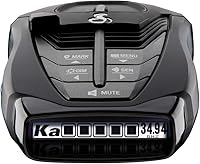
The R4W's built-in GPS can remember and automatically mute false alert locations along routes. Its voice alerts and OLED display offer different ways to receive information while driving.
Can GPS and filtering make radar detectors more useful?
GPS and filtering can make alerts easier to manage, especially at repeat false alert locations. These features help reduce nuisance alerts, but they don't guarantee accurate alerts or complete detection.
The Uniden R4W combines GPS with auto mute memory. The Cobra RAD 700i pairs GPS with AutoLearn Intelligence and filtering that is designed to reduce false signals over time.
Consider where you drive. Someone who passes the same urban routes often may value remembered locations, while a driver whose routes change daily may get less value from learning those locations.
Keep settings and alert sounds clear enough to understand without staring at the display.
How should you choose a radar detector?
Choose based on the alerts and features you'll use, rather than the longest feature list. Start with supported bands, then consider false alert management, display and voice options, directional information, and phone connections.
The Uniden R4W suits drivers who want built-in GPS auto mute memory, voice alerts, and Wi-Fi and Bluetooth features. Skip it if you want a simple detector and don't plan to use its connected features.
The Cobra RAD 700i suits drivers who value GPS-based AutoLearn, front and rear detection, and shared alerts through Drive Smarter. Its Apple CarPlay and Android Auto compatibility may help drivers who want to view route information and interact with alerts on the vehicle display.
Skip it if community alerts and connected features aren't useful to you.
The Escort MAX 360 MKII suits drivers who want directional arrows to show where an alert is coming from, along with GPS-based AutoLearn and shared alerts. Its arrows may be more information than you need if you prefer a straightforward alert with no directional display.
For another way to compare models, read our guide to what to look for in a radar detector. Match its advice to your actual routes and comfort with alerts, not to features you won't use.
How do you set up and use a detector sensibly?
Set it up so alerts are easy to notice without pulling your attention from driving. Use the included power connection as intended, choose voice or display settings you can understand at a glance, and learn the controls before setting out.
Follow the model's instructions for mounting and placement, and make sure the detector doesn't block your view. Our guide to installing a radar detector covers placement and setup choices.
If your detector offers GPS memory or AutoLearn, give it time and repeat routes to learn locations where alerts recur. Review mute settings from a safe stop if you need to correct a remembered location.
Don't adjust controls while moving or treat a quiet detector as proof that the road is clear.
Keep the detector and its power connection secure, and check the display and alerts before driving. If you use phone or vehicle-display features, set them up while parked and avoid interacting with them on the move.
What mistakes can make a detector less useful?
The biggest mistake is treating an alert as permission to speed or as a guarantee that no alert means no enforcement. A detector reports signals it recognizes; it doesn't control how an officer measures speed or whether a signal reaches the device.
Another common mistake is reacting sharply to every alert. False signals can happen, and a detector's alert may not identify the source.
Keep a steady focus on traffic and obey posted limits.
Drivers can also overvalue a single feature. Long-range claims don't promise a particular warning distance, and GPS memory doesn't remove every false alert.
Laser detection doesn't defeat laser measurement. Choose features for the job they do, then account for what they cannot do.
How far can police radar detect speed?
There isn't one reliable distance for every radar speed measurement. Conditions and the radar setup can change how far away a measurement is possible.
A detector's alert range isn't the same as the distance at which police radar can measure speed. Read how far police radar can detect speed for more context, and don't use distance estimates to decide how fast to drive.
Are radar detectors legal where you drive?
Rules vary by location and vehicle type, so check the rules that apply to your route. A detector's ability to receive a signal doesn't determine whether using it is allowed.
Review how to use a radar detector legally and where radar detectors are illegal before using one. Follow posted limits wherever you drive.
Do radar detectors work anymore for you?
Yes, if you want alerts to supported radar signals and understand that they are limited. Choose the Uniden R4W for GPS auto mute memory and voice alerts, the Cobra RAD 700i for AutoLearn and shared alerts, or the Escort MAX 360 MKII if directional arrows matter to you.
Skip a detector if you expect it to prevent tickets, identify every threat, or make speeding safe. For a broader starting point, read our plain-English guide to radar detectors for cars, then drive within the limit and treat alerts as one piece of information.
Frequently asked questions
Do radar detectors still work with modern police radar?
Yes. A detector can alert to radar signals it supports, including K, Ka, and X bands.
Signal type, road layout, traffic, and how radar is used affect whether and when an alert arrives, so no detector can promise advance warning on every drive.
GPS memory and filtering can reduce some repeat false alerts, but they don't make detection complete.
Can a radar detector detect laser?
Some radar detectors also include laser detection, but a laser alert may arrive only after an officer has measured a vehicle. Treat it as an alert, not as protection from a laser speed measurement.
Read our guide to whether radar detectors pick up lidar for more on the difference.
Does a radar detector stop a speeding ticket?
No. A detector only alerts to signals it recognizes, and it can't change a speed measurement or guarantee you'll get an alert in time.
It is an awareness tool, not a way to make speeding safe.
Follow posted limits and check local rules before using a detector.
What features matter in a current radar detector?
Start with supported bands, clear alerts, and filtering that fits the roads you drive. GPS can remember some repeat alert locations, while voice alerts can share information without requiring you to read the display.
Directional arrows, phone connections, and shared alerts can help some drivers.
Choose only features you'll use without losing focus.